BIO-CROP Living lab- Open discussion be held on 15 October, 2026 at Agriculture Academy, Vytautas Magnus Univesity
From Problems to Solutions: Discussing the Future of Resilient Crop Production
On 15 October 2026, the BIO-CROP project held an open discussion, “From Problems to Solutions: How to Build More Resilient Crop Production?”, during the international AgroEco 2026 conference at the Vytautas Magnus University (VMU) Agriculture Academy. The event brought together 18 farmers, scientists, advisors, and representatives of business, the public sector and agricultural organisations.
After an opening by Dr J. Balandaitė and a welcome from Assoc. Prof. Dr A. Adamavičienė, Dean of the Faculty of Agronomy, project leader Prof. Dr K. Romaneckas presented BIO-CROP’s goals. He highlighted how greater plant diversity, multi-species cropping and innovative cultivation technologies can make agroecosystems more sustainable and climate-resilient.
Living Labs in practice
Dr Rita Lankauskienė, head of the LIRA Living Lab at the Lithuanian Centre for Social Sciences, shared the principles and practical experience of Living Labs, a key part of BIO-CROP. Living Labs allow scientists, farmers, businesses and public bodies to develop solutions together and test them in real conditions.
Research and survey results
PhD student K. Jackevičienė (supervisor Assoc. Prof. Dr A. Sinkevičienė) presented research at the VMU Botanical Garden on maize grown with medicinal aromatic plants. Dr Balandaitė shared results of the BIO-CROP farmer survey, which showed interest in crop diversification and cooperation.
Key challenges raised
In the open discussion, participants pointed to:
- climate change, soil degradation and biodiversity loss;
- balancing farm profitability with long-term protection of natural resources;
- rising production costs and risks from global markets and geopolitics;
- the need for closer cooperation between science and practice, so research reaches farmers and reflects their real needs.
BIO-CROP’s upcoming Living Labs activities are designed to support exactly this kind of cooperation.
The discussion brought different experiences and perspectives together and laid the groundwork for continued dialogue and shared solutions.
In Lithuania, the project activities are funded by the Research Council of Lithuania. Project No. LMT – S-Agroecology 26-1.
----------------------------------------------------------
BIO-CROP was introduced at the European Society for Agronomy Congress in Estonia
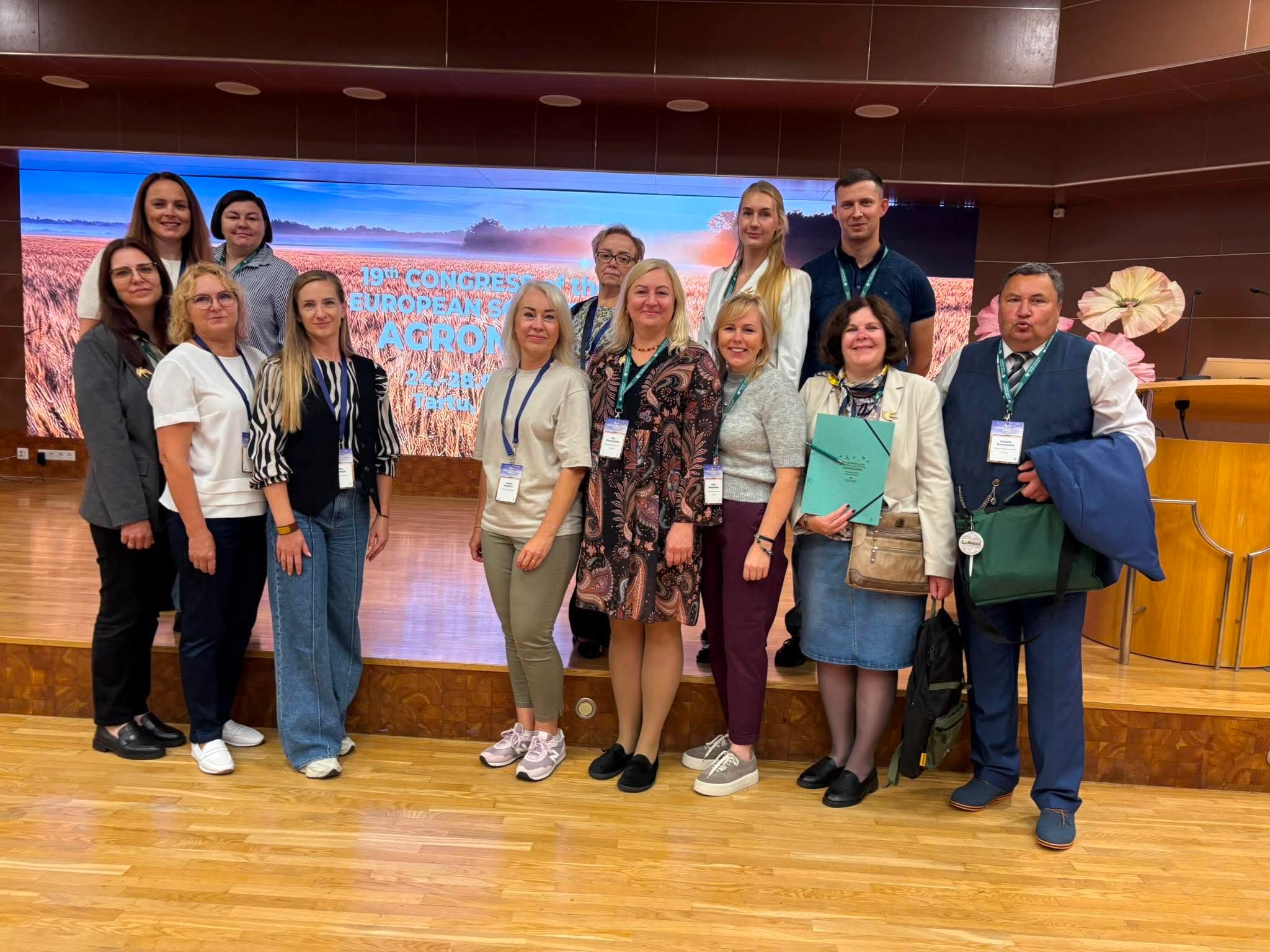
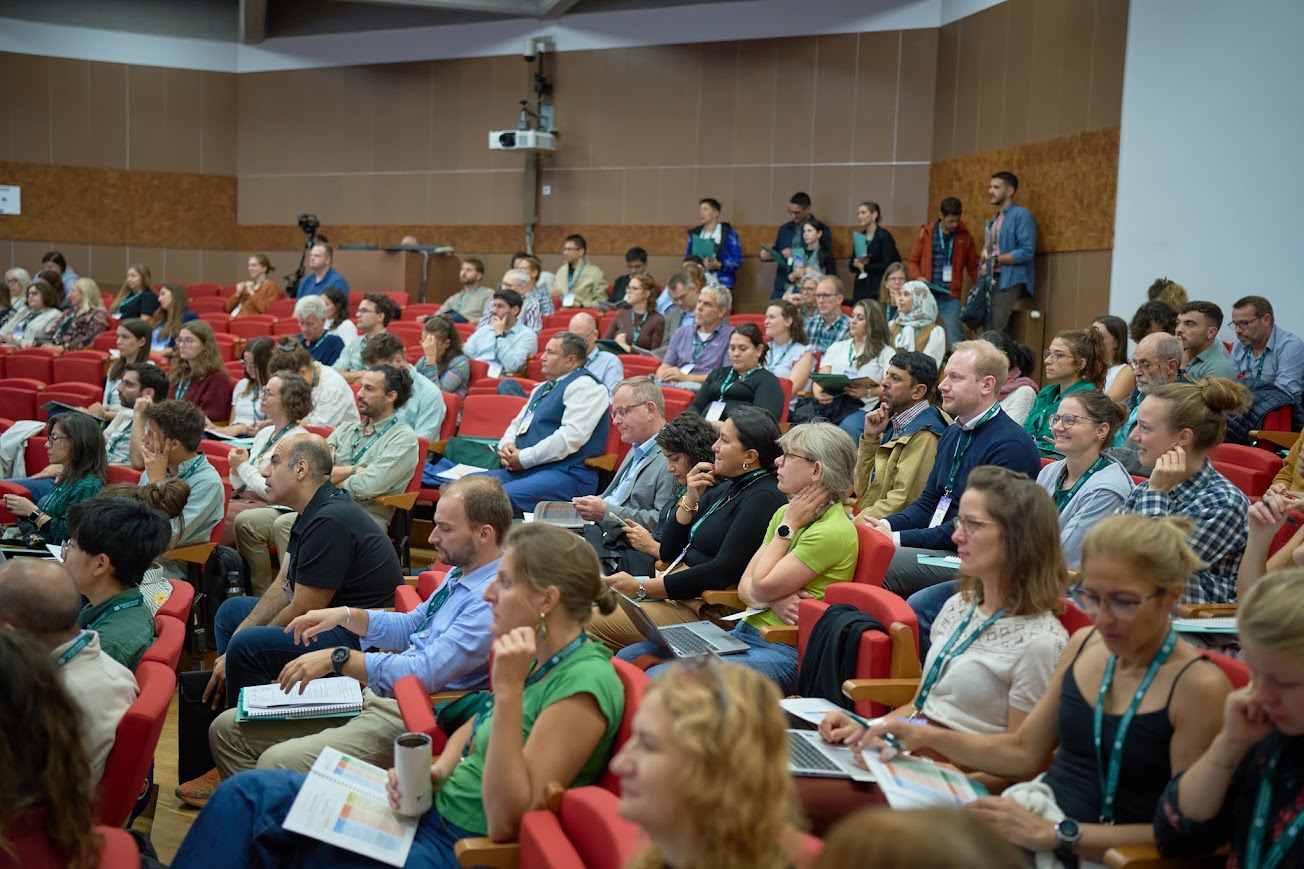
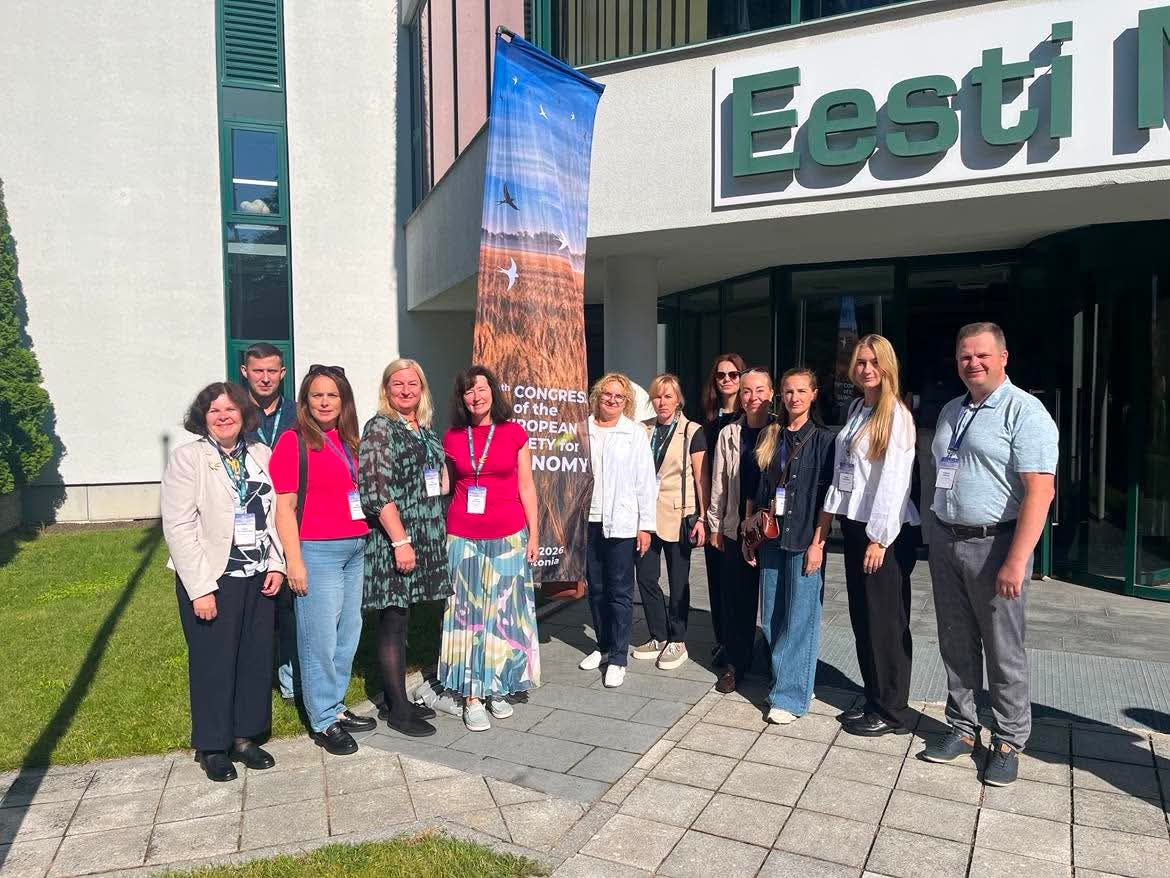
The scientists from various countries around the world specializing in agronomy, crop science, agroecology, and other related fields gathered in Tartu, Estonia, for the European Society for Agronomy (ESA) Congress in August 24–28, 2026. The congress featured the latest research, ideas, and practical solutions aimed at creating more sustainable, resilient, and biodiversity-based agricultural systems.
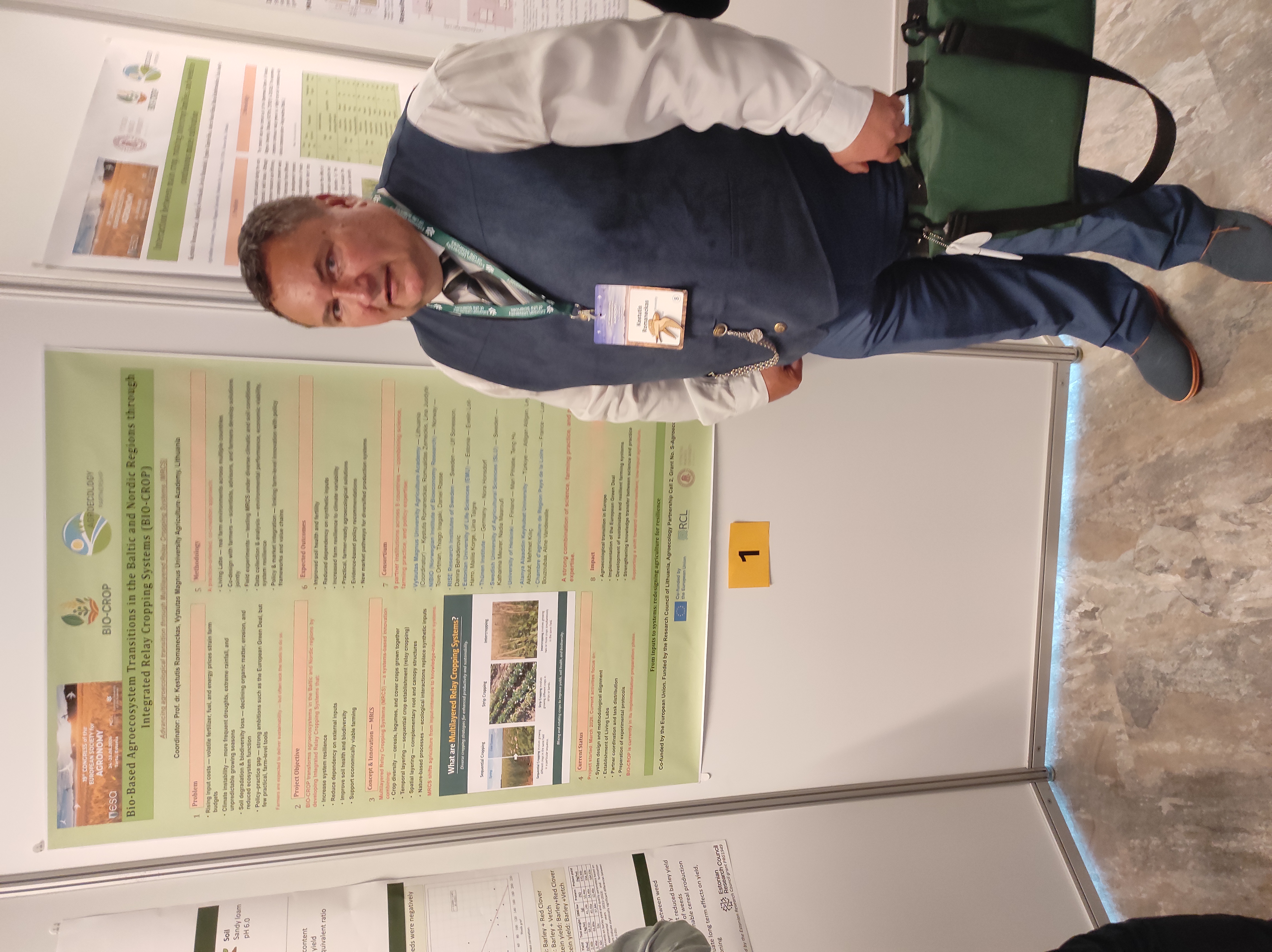
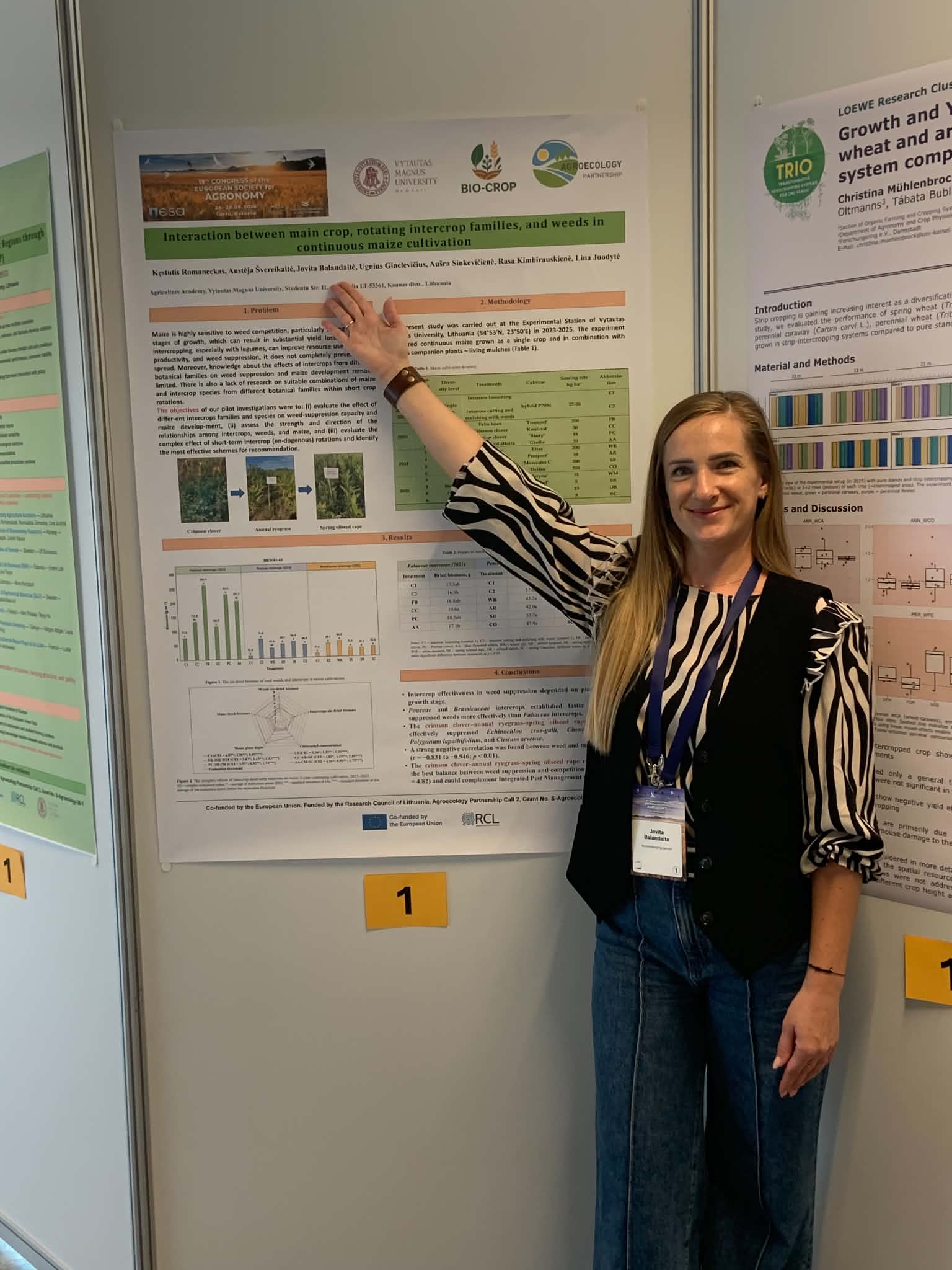
The BIO-CROP project’s research team presented studies related to multiple cropping systems. One of the posters was dedicated to the BIO-CROP project — 'Multilayered Relay Cropping Systems for Agroecological Transition in the Baltic and Nordic Regions'.
The BIO-CROP project aims to contribute to the agroecological transformation of agriculture in the Baltic and Nordic regions by developing and evaluating multilayered and relay cropping systems. These systems are based on greater plant diversity and more efficient use of spatial and temporal resources. Such systems can help make more efficient use of natural resources and contribute to the development of more sustainable and resilient agricultural systems.
The project presentation at the conference provided an opportunity not only to introduce the international scientific community to the ideas and ongoing research of BIO-CROP but also to share experiences with researchers working in similar fields. During the discussions, experiences from different regions were compared, and mixed and intercropping.
Focus on Mixed Crop Systems
A separate section of the congress’s scientific program was devoted to mixed crop systems. It featured research conducted in various European countries and beyond, examining the productivity of mixed crops, nitrogen use efficiency, plant disease and weed control, biodiversity, and interactions between different plants.
Presentations on these topics were given by Wopke van der Werf, Maé Guinet, Timothé Wantz, Chloe MacLaren, and other researchers. The presented studies revealed a broad spectrum of mixed-crop research and a growing focus among scientists on plant-diversity-based agricultural systems.
From Scientific Discussions to Practical Solutions
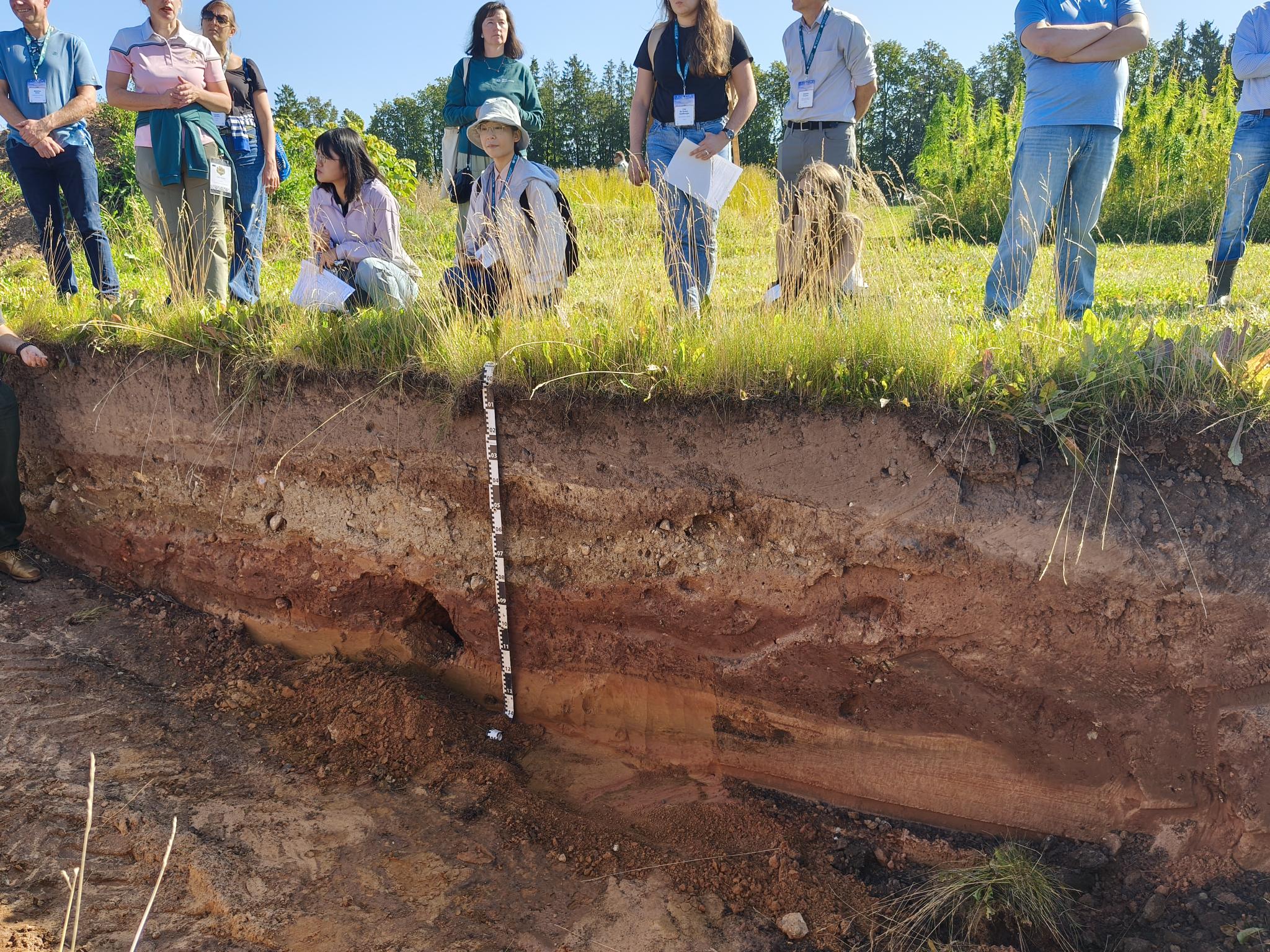
The conference program was complemented by a field trip, which provided an opportunity to gain a closer look at crop research and sustainable farming practices in Estonia.
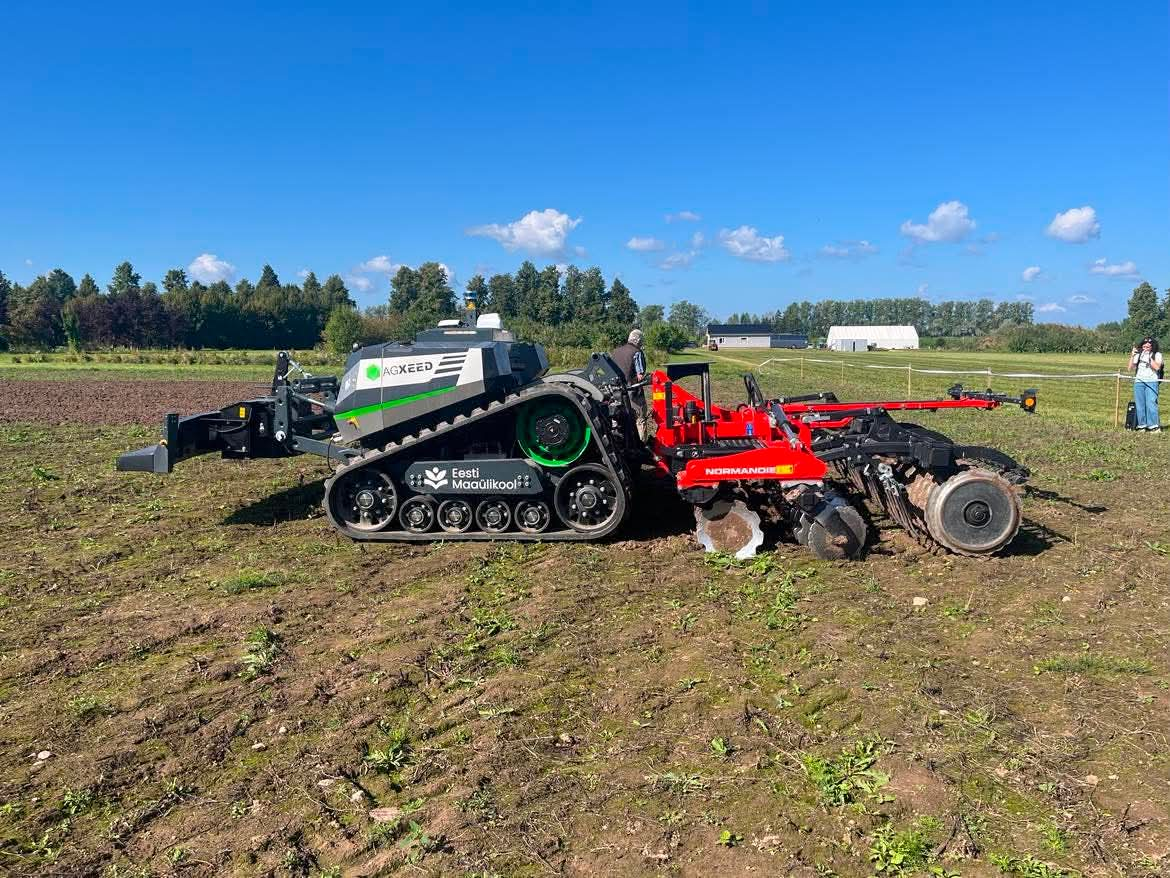
Participants visited the Rõhu Experimental Station of the Estonian University of Life Sciences, where field research on plants, soil, and sustainable agricultural technologies is conducted. There, they were able to learn about ongoing field experiments, precision farming technologies, the use of autonomous field robots and drones for crop monitoring, and other technological solutions applied in modern crop production.
The Value of International Experience for the BIO-CROP Project
Participation in the ESA Congress was an important step in increasing the international visibility of the BIO-CROP project and strengthening ties with scientists from other countries. The discussions, research presentations, and practical examples shared at the congress provided new insights into the potential of mixed and intercropped cropping systems.
This international exchange of knowledge and experience will contribute to the further development of BIO-CROP activities and research on agroecological crop production systems in the Baltic and Nordic regions.